How Much Sealing Wax Do You Need for Each Seal?
Estimate sealing wax from a small test batch, then calculate supplies for your project without relying on a bead count that may not match your materials.
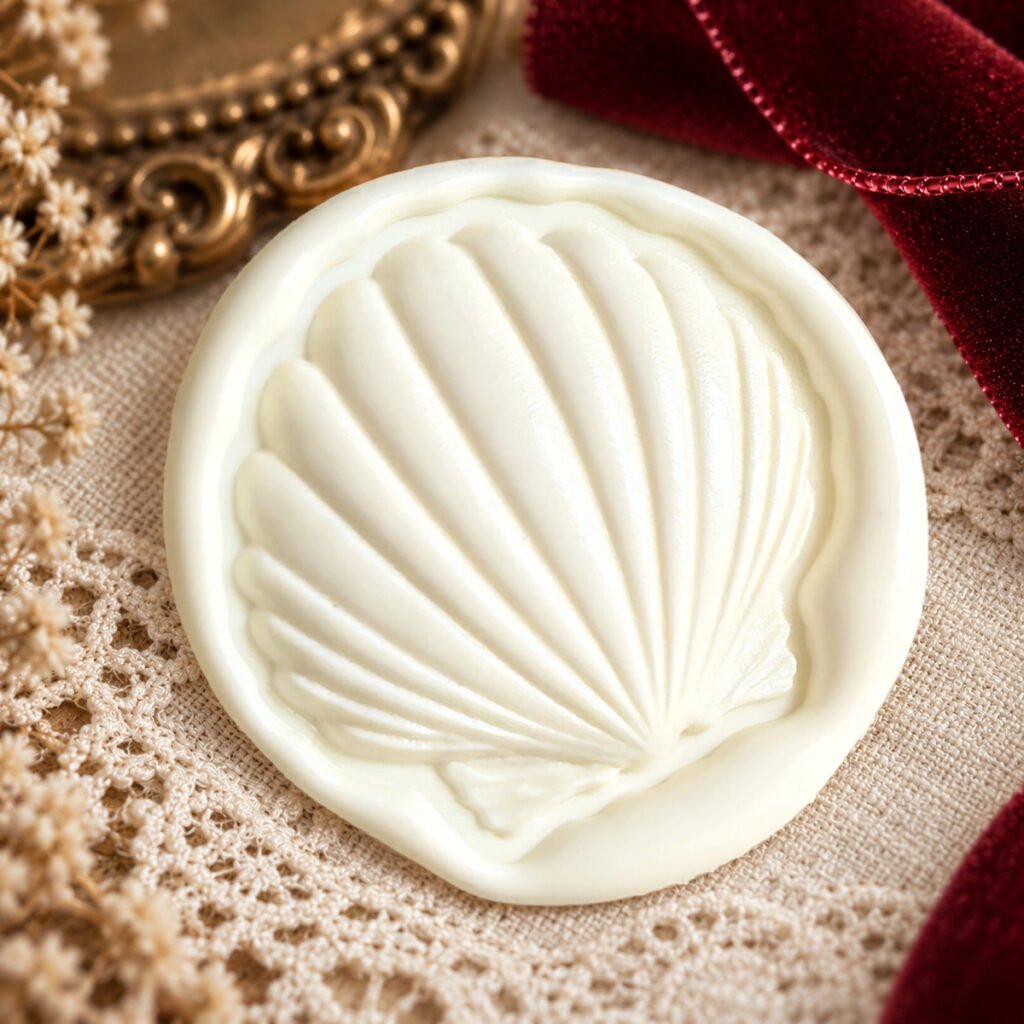
There is no dependable bead count for every wax seal. Beads differ in size, stamp heads differ in shape, and a wide border uses more material than a close one. The most useful estimate comes from a small sample made with your exact stamp and wax.
Decide what you are trying to make
Before counting wax, choose the impression you want: complete coverage of the design, your preferred border, and a thickness suited to the project. A seal for a keepsake tag may have different priorities from one placed inside a notebook.
For example, the Summer Scallop stamp is listed at 23mm, while the Vintage Magnolia stamp is listed at 30mm. The measurement refers to the head. It should help you plan a trial, but it does not establish an exact wax weight or number of beads for either design.
Calibrate with a few practice pours
- Choose one wax product and one stamp.
- Begin with the wax supplier’s suggested amount, if one is provided for a comparable head.
- Make a practice seal and assess whether the entire design is covered.
- Adjust the amount gradually until the border suits your layout.
- Repeat that amount several times before using it as a planning figure.
Use scrap material representative of your project. Keep successful and unsuccessful samples apart. Otherwise, a generous-looking pile of practice seals can make you overestimate how many finished pieces your supplies will produce.
Count beads or measure weight?
Counting can be convenient when every bead comes from the same product and appears consistent. Weight is more useful when pieces vary, when you cut sticks, or when you want to compare a larger batch. Use a scale with enough resolution to distinguish the small amounts involved.
You do not need laboratory precision. The point is to replace an unrelated internet estimate with a record from your own materials. For very small quantities, weighing a group of successful seals can be easier than trying to measure each one separately.
A planning formula
Estimated wax needed = successful sample amount per seal × number of finished seals + a separate practice and waste allowance.
For a hypothetical example, suppose your trial consumes 12g of wax to make six usable seals. That suggests about 2g per usable seal for that setup. Fifty similar seals would then require about 100g before adding your chosen allowance. These figures illustrate the arithmetic; they are not a measured recommendation for a Cirevora stamp.
Leave room for rejected attempts, wax left in the tool, and any extras you intend to keep. The allowance should reflect how consistent your trial was. A first project with several colors deserves more flexibility than a familiar single-color routine.
What changes the estimate?
- A different head size or outline.
- A wider outer border or thicker finished seal.
- A new wax product or differently sized beads.
- Color changes that leave mixed wax in the tool.
- More practice pieces or a higher number of rejected impressions.
Changing the design halfway through a batch is a reason to repeat the trial, not to assume the old figure still applies. Also distinguish the number of guests from the number of envelopes: a household may receive one invitation containing several names.
Keep a simple project note
Record the stamp, wax product, amount used, number of usable seals, and preferred border. Add a photograph of the sample beside a ruler if size matters. Next time, that small record gives you a sensible starting point without pretending that every handmade seal will use exactly the same amount.
Editorial note: Product images are Cirevora catalog illustrations, not photographs of a tested tutorial. Decorative coloring and styled backgrounds may be used; refer to the linked product listing for included items and photo details.